General

Conflict Balance, or Can You Write a SF Siddharta?

I love internal conflict.

Is there a God?  Should I save my friends or pursue the ways of the Force?  Are pirates really the way to go, or am I really a member of the ninja clan?

Internal conflict drives many literary novels.  Herman Hesse’s Siddharta is an exploration of spiritual identity; Jonathan Livingston Seagull is a quest for meaning.  Done well, it can move a reader to tears.

But it’s very difficult to do in genre fiction.  The market expects a minimum dose of external conflict, something outside the characters’ heads to invest in.  You really can’t write the SF Siddharta.  But there are other ways to play.
Why You Should Do NaNoWriMo

In just over a month, I will be participating for the fifth time in National Novel Writing Month, a challenge to write a 50,000 word novel during November.  I wrote the entirety of Herald of Change during my first NaNoWriMo, and half of Those Who Favor Fire in my second (both books are looking for publishing homes).  I completed the rough draft of Dahlia last year as well.  Many published authors, such as Mary Robinette Kowal, participate, and the website posts pep talks by other prominent authors encouraging participants to finish.

A Cool Thing

Brandon Sanderson, epic fantasy writer, taught a writing class last year. His lectures are available online in video form; I’ve watched about half of them so far. If you’re familiar with Writing Excuses, he covers a lot of the basics that you might find helpful, including both craft and business topics.

We're Back!

After forgetting this blog for over a year and getting flagged as a malicious site, I performed some maintenance and got it up and running again.  Expect fewer essays and more stream-of-consciousness posts about nerdy shit.

Also, comments are turned off until further notice.  I just don’t have the time or patience to moderate.

Fall of the House of Stark: Some Thoughts on A Song of Ice and Fire So Far

Fall of the House of Stark: Some Thoughts on A Song of Ice and Fire So Far

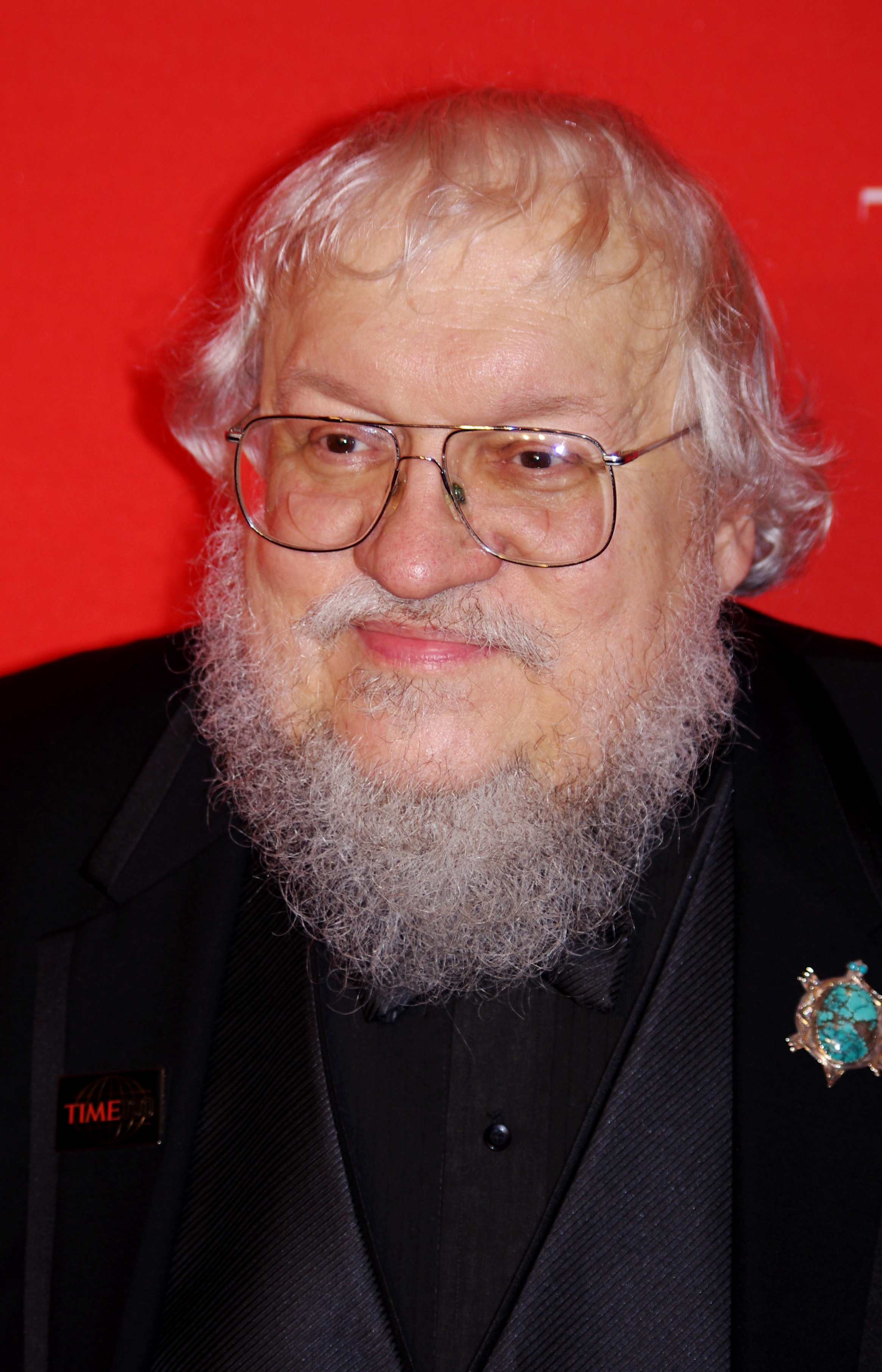
Image source: http://commons.wikimedia.org/wiki/File:George_R_R_Martin_2011_Shankbone_2.JPG

(This is part 6 of an exploration of A Song of Ice and Fire by George R. R. Martin.  Read prior posts here.)

(Series spoilers ahead!)  In my review of Game of Thrones a few months ago, I noted that the series was about the fall of the Stark family, how good intentions can lead to ruin.  But in reading the rest of the series, I discovered it’s not about the Starks at all, although members of that family figure prominently in the plot.  No, the series is about the need for realistic, sometimes cynical decision-making in a world with no room for error, but the defining moment isn’t when Ned Stark loses his head.

It’s when Robert Baratheon slayed Rhaegar Targaryen.

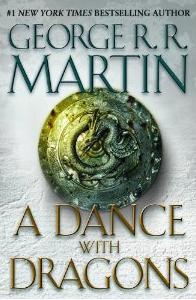
Fall of the House of Stark, Part 5: A Dance With Dragons

Fall of the House of Stark, Part 5: A Dance With Dragons

(This is part 5 of an exploration of A Song of Ice and Fire by George R. R. Martin.)

George R. R. Martin faced a difficult problem when he finished A Feast for Crows.  He had written a significant portion of his next book – A Dance with Dragons – from the leftovers from Feast, but it wasn’t coming together.  He faced the task of rewriting the unpublished half of a popular published book, breaking nothing in the existing narrative while improving the story.

This is why it took six years to finish.

Martin’s entire series is is a hydra: for every plot head he cuts off, another three take its place.  A Dance with Dragons doesn’t cover much more ground than A Feast for Crows – mostly that already told in the last book – but makes up for it in the sheer breadth of character interaction and story continuity.

It is also about characters forced out of their depth.  Adept chessmaster Tyrion Lannister becomes powerless; would-be child conquerer Daenerys Targeryen must learn to rule; and idealist Jon Snow learns the price of compromise in Westeros.

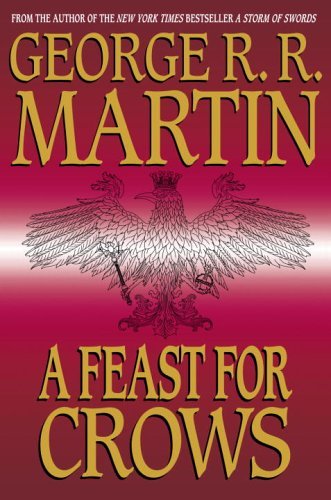
Fall of the House of Stark, Part 4: A Feast for Crows

Fall of the House of Stark, Part 4: A Feast for Crows

(This is part 4 of an exploration of A Song of Ice and Fire by George R. R. Martin.)

Back when I reviewed A Game of Thrones, I likened the series A Song of Ice and Fire to a television show, given Martin’s experience in showrunning.  If that’s so, then A Feast for Crows feels like a season abbreviated by a writer’s strike: some excellent leadup, including exploration of two intriguing characters we’ve only witnessed second-hand, but with the series’ most popular characters left out for the sequel.  But it also covers excellent ground, scarce explored previously.  This is a book about a loss of identity, and what happens when peasant revolt and religious fervor mix.

Be a Geek and a Jock

Be a Geek and a Jock

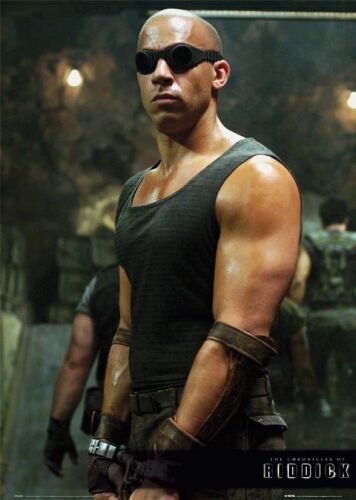
A friend of mine in college once contrasted Russell Crowe and Vin Diesel.  One, she said, was great actor but a horrible human being; the other was a great human being but a horrible actor.  The point was that the ideal actor would be some combination of Crowe and Diesel, perhaps “Russell Diesel” or “Vin Crowe” (actually, I like that one!).  “Vin Crowe” would be the best of both worlds.  But what surprised me is her mention that Vin Diesel plays Dungeons and Dragons.

Yes, the star of the Fast and the Furious series rolls a D20.

And Diesel’s no casual fan, either.  Playing for 20 years, he’s been a DM for many campaigns, written material for D & D manuals, and had his favorite PC tattooed on him.  It’s such a surprise because a high-profile action star isn’t what one has come to expect from the typical role-playing geek.  Well, there shouldn’t be such a thing.

What disarms me the most is how fit he is.

Nostalgia for Cyberpunk

I saw the pilot movie for Max Headroom the other day.  I wasn’t lucky enough to catch the pilot or the full series when it first appeared in the US in 1987.  In fact, I wasn’t exposed to anything cyberpunk until 1995, when I saw The Lawnmower Man on VHS (a movie I’d like to revisit sometime).  I didn’t read cyberpunk literature until late into college, when my work crew boss (and college webmaster) recommended Neuromancer by William Gibson.  Afterwards, I ate up anything like Gibson’s work I could get my hands on – the rest of the Sprawl trilogy, Blade Runner, Ghost in the Shell (the manga, the movie and the TV show!), and others.  But Max Headroom had to wait until just recently before I could see it.

The show follows an intrepid reporter, Edison Carter, who lives “twenty minutes into the future” in a world dominated by TV networks.  After a motorcycle crash, his consciousness is copied into a powerful computer, creating the eccentric AI Max Headroom (so-named after Carter’s last thoughts before the crash).  Carter recovers, and with Max he continues to investigate the gritty secrets of his media-ruled world.

Well, it’s nothing like the cyberpunk I came to love in college.

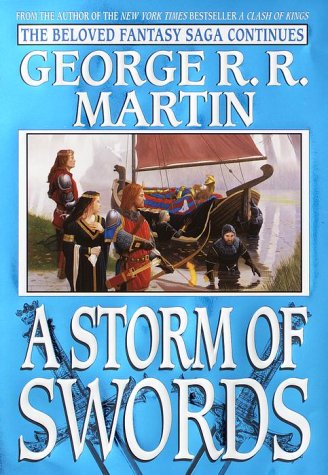
Fall of the House of Stark, Part 3: A Storm of Swords

Fall of the House of Stark, Part 3: A Storm of Swords

(This is part 3 of an exploration of A Song of Ice and Fire by George R. R. Martin.)

Years before the events of the first book A Game of Thrones, Tywin Lannister became lord of Casterly Rock and inherited a title in shambles.  His father had squandered away the family’s fast wealth, leaving them under tremendous debt.  It took years for Tywin to restore the family to its prior glory, and during that time he developed a reputation as a cold-hearted, ruthless ruler.  One of his “bannermen,” or lesser lords that owe allegiance to the Lannisters, was Lord Reyne of Castamere who, with Lord Tarbeck, rebelled against Tywin.  Tywin defeated both, leaving nothing of either the Reynes or Tarbecks alive or standing.  A bard immortalized their fall with “The Rains of Castamere,” painting Tywin Lannister in a harsh light.  But Tywin took to the song, and it became his anthem for when he wanted to remind enemies and allies alike of what he is capable of.

A Storm of Swords is the strongest book in the Song of Ice and Fire series.  It has the most forceful (if not quite “satisfying”) conclusion, with the most significant character development.  And it has a curious recurring subtext: the importance of song.  People are songs; dynasties are songs; whole lands are songs.

And songs must end.